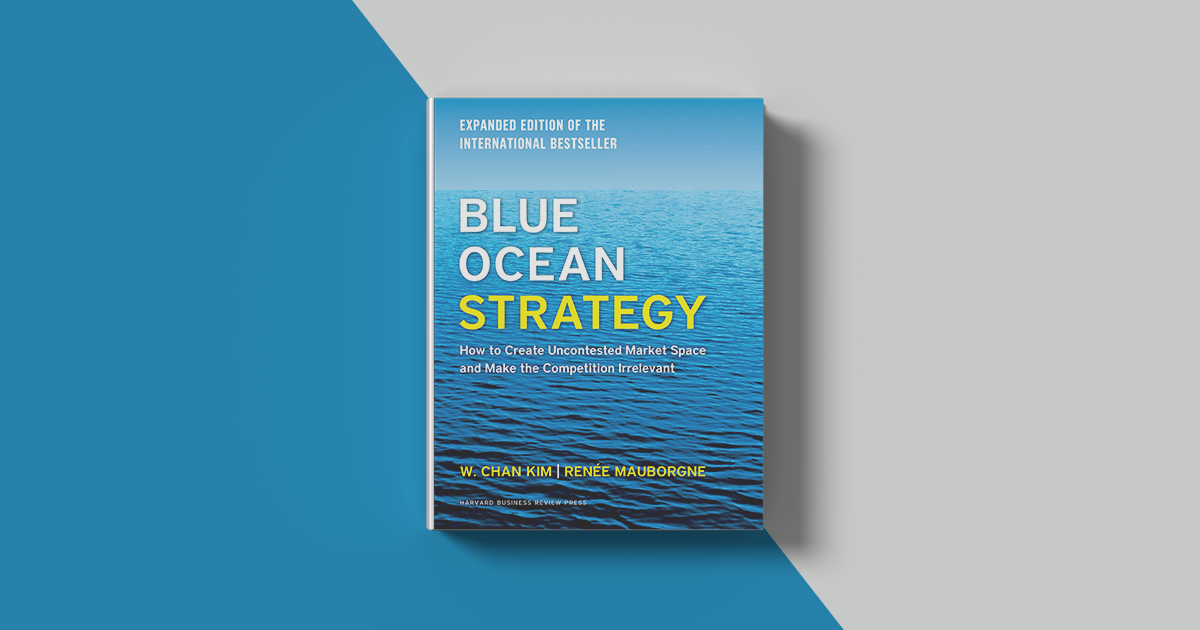
Blue Ocean Strategy is a strategy that helps companies fight their competitors by not focusing on fighting competitors at all, but rather on creating new markets in which to operate, thereby eliminating the importance of their competitors.
The Blue Ocean Strategy was developed by two business management professors:
W. Chan Kim & Renée Mauborgne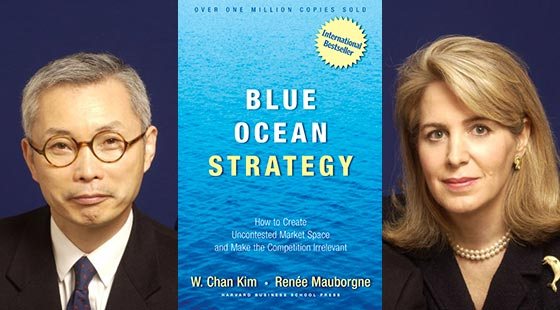
Blue Ocean Strategy is a strategy that helps companies fight their competitors by not focusing on fighting competitors at all, but rather on creating new markets in which to operate, thereby eliminating the importance of their competitors.
The publication of the book Blue Ocean Strategy is considered a revolutionary upheaval in both marketing literature and methodologies. This aforementioned strategy calls for abandoning the concept of competition that has prevailed for decades in management literature. The two researchers call for leaving the raging war between competitors and creating new opportunities.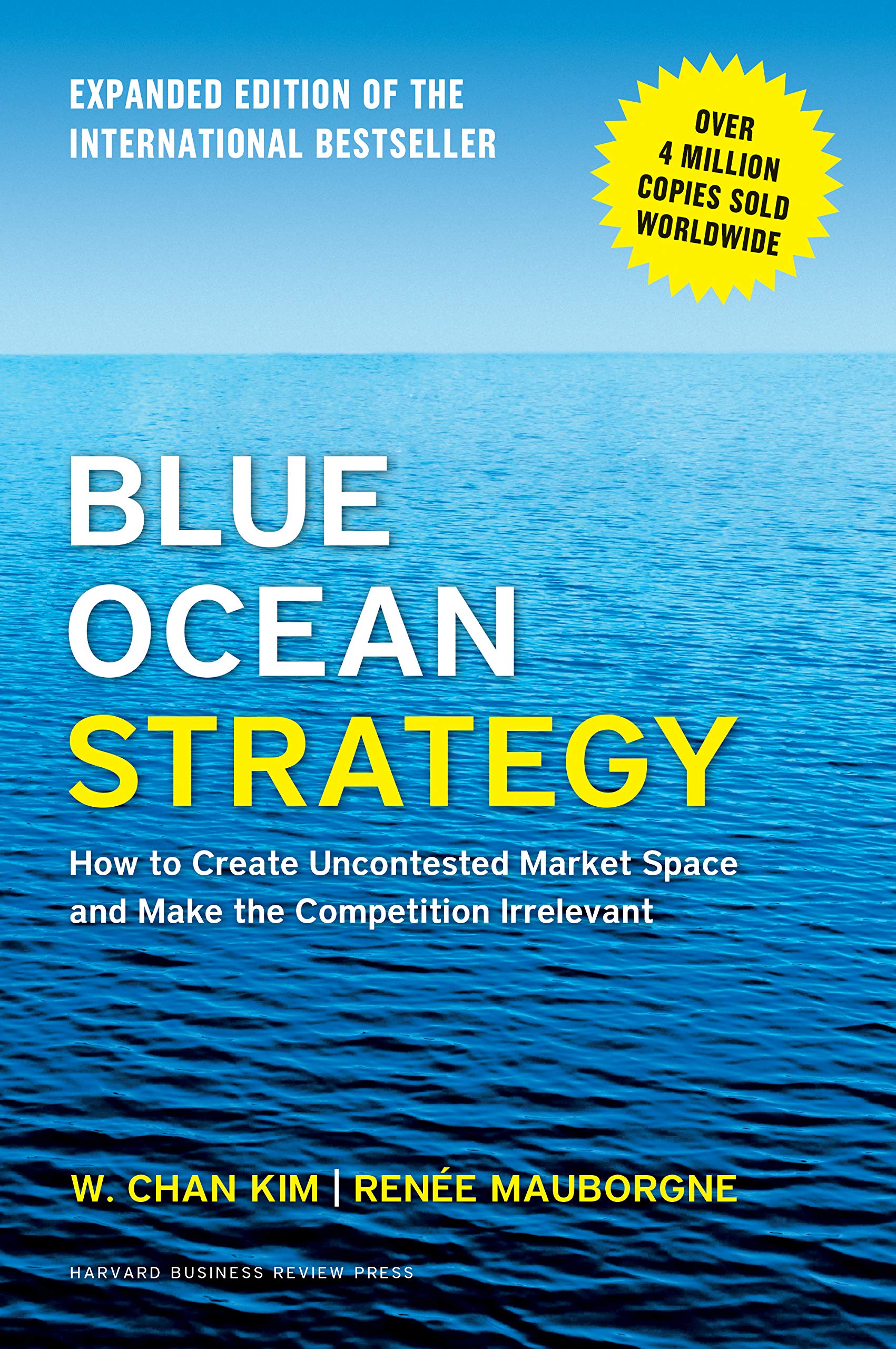
The Book: Blue Ocean Strategy
The name comes from envisioning competitors in the market as a sea full of sharks circling and competing for prey, making the market like a red ocean full of blood. The Blue Ocean Strategy involves several systems and analytical tools that help you move away from the red ocean of competition and create a clear blue ocean where you operate in a market where no one competes with you.
A strategy that helps companies fight their competitors by not focusing on fighting competitors at all!
The two researchers identified two types of markets:
Markets Full of Competitors: The authors likened these to a "Red Ocean" stained with blood, referring to existing and defined markets, where there is fierce and bloody competition, representing the known market space. This is where all industries currently exist. In this space, all boundaries are determined, defined, and accepted, and companies try to outperform each other. However, as the market space becomes crowded, the potential for profit and growth diminishes.
New Markets Free of Competitors: The authors likened these to a "Blue Ocean," referring to the latent, vast, and deep market space that has not yet been discovered (not yet explored). These represent untapped market spaces, free from competition, characterized by creating new demand based on new ideas that lead to a leap in value for the customer and the company simultaneously, thereby creating extremely profitable growth opportunities.
The ERRC Grid and Creating New Markets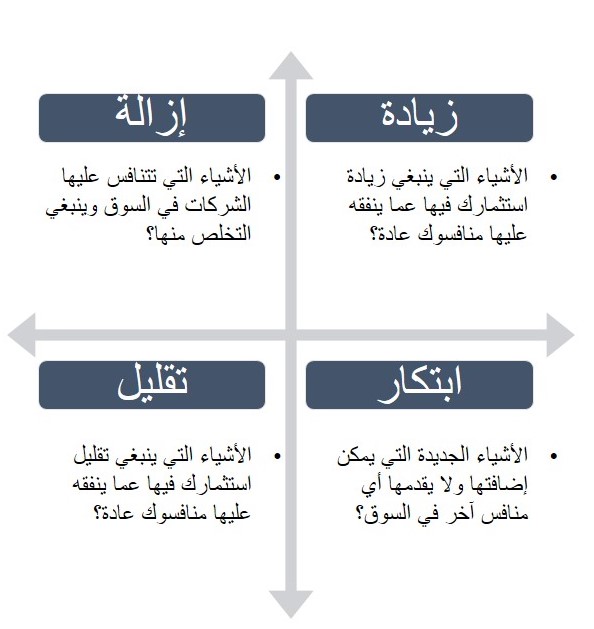
The authors presented four ways to create new markets, represented as follows:
[Note: The original text mentions a graphic here showing four quadrants: Eliminate, Reduce, Raise, Create.]
Steps to Use the ERRC Grid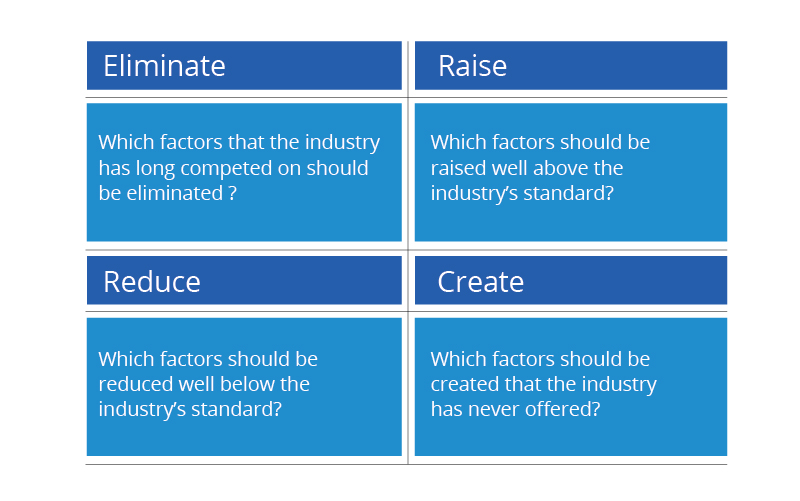
Step 1: Eliminate Competitive Factors
Question in this step: What competitive factors can be eliminated from industry standards?
Example: In the world of commercial aviation, free food and drinks can be eliminated—things travelers take for granted. Removing them will not affect the core service but will reduce the ticket price and attract more customers who mostly cannot afford to fly.
Step 2: Reduce Investment in These Factors
Question in this step: What competitive factors can investment be reduced in compared to what competitors typically spend?
Example: Reducing the exaggerated level of service in airport lounges and making in-flight hospitality services optional.
Step 3: Raise Investment in These Factors
Question in this step: What competitive factors can investment be increased in, surpassing what competitors spend?
Example: Following a strategy focused on the main cities customers travel to and increasing the number of flights to certain cities.
Step 4: Create Completely New Factors
Question in this step: What competitive factors can be created that no competitor in the market offers?

Dr. Abdulrahman Aljamouss, PhD is a strategic consultant, academic, trainer, and author with over 20 years of professional experience in workforce development, leadership capability building, and institutional transformation. He partners with organizations to design future-ready strategies, develop leadership pipelines, and deliver measurable, sustainable impact.



Dr. Abdulrahman Aljamouss, PhD is a strategic consultant, academic, trainer, and author with over 20 years of professional experience in workforce development, leadership capability building, and institutional transformation. He partners with organizations to design future-ready strategies, develop leadership pipelines, and deliver measurable, sustainable impact.

© Copyright - Dr. Abdulrahman Aljamouss, PhD
Powered & Designed with by Synapze

Dr. Abdulrahman Aljamouss, PhD is a strategic consultant, academic, trainer, and author with over 20 years of professional experience in workforce development, leadership capability building, and institutional transformation. He partners with organizations to design future-ready strategies, develop leadership pipelines, and deliver measurable, sustainable impact.