One day in 1995, a large, heavy middle-aged man robbed two Pittsburgh banks in broad daylight. He didn’t wear a mask or any sort of disguise. And he smiled at surveillance cameras before walking out of each bank. Later that night, police arrested a surprised McArthur Wheeler. When they showed him the surveillance tapes, Wheeler stared in disbelief. “But I wore the juice,” he mumbled. Apparently, Wheeler thought that rubbing lemon juice on his skin would render him invisible to videotape cameras. After all, lemon juice is used as invisible ink so, as long as he didn’t come near a heat source, he should have been completely invisible.
One day in 1995, a large, heavy middle-aged man robbed two Pittsburgh banks in broad daylight. He didn’t wear a mask or any sort of disguise. And he smiled at surveillance cameras before walking out of each bank. Later that night, police arrested a surprised McArthur Wheeler. When they showed him the surveillance tapes, Wheeler stared in disbelief. “But I wore the juice,” he mumbled. Apparently, Wheeler thought that rubbing lemon juice on his skin would render him invisible to videotape cameras. After all, lemon juice is used as invisible ink so, as long as he didn’t come near a heat source, he should have been completely invisible.
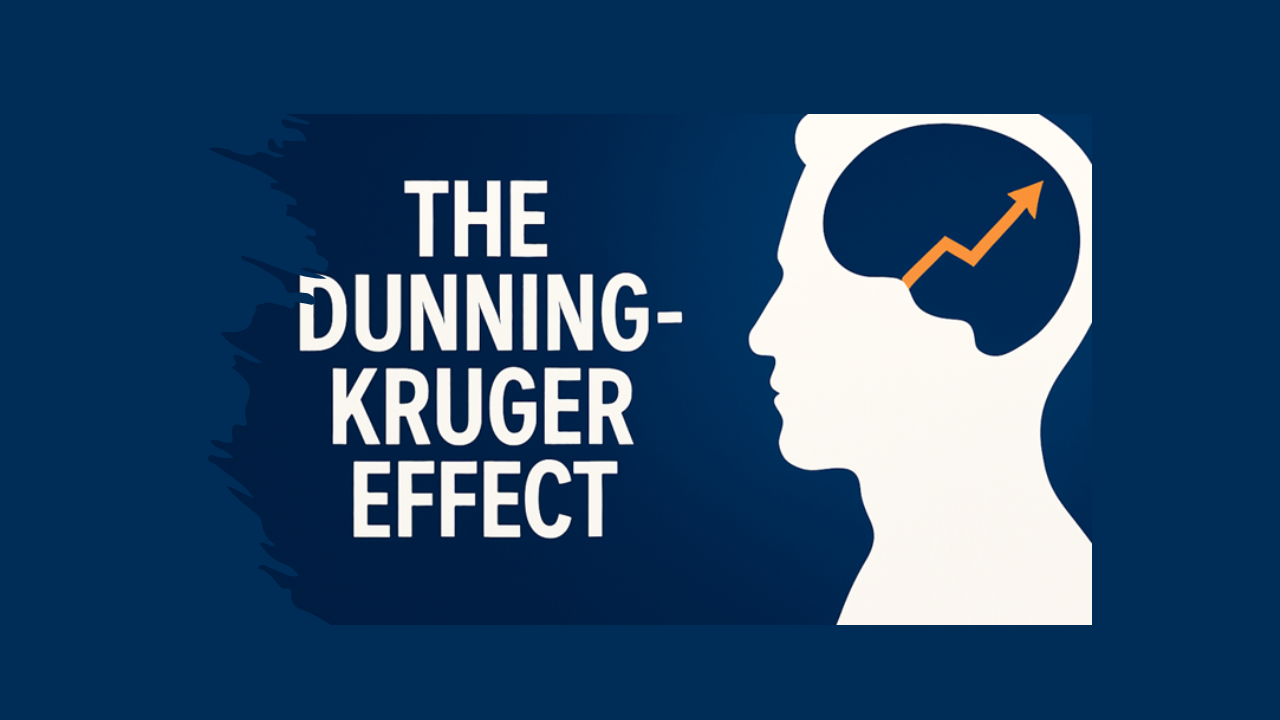
Police concluded that Wheeler was not crazy or on drugs—just incredibly mistaken, The saga caught the eye of the psychologist David Dunning at Cornell University, who enlisted his graduate student, Justin Kruger, to see what was going on. They reasoned that, while almost everyone holds favorable views of their abilities in various social and intellectual domains, some people mistakenly assess their abilities as being much higher than they actually are. This “illusion of confidence” is now called the “Dunning-Kruger effect,” and describes the cognitive bias to inflate self-assessment.
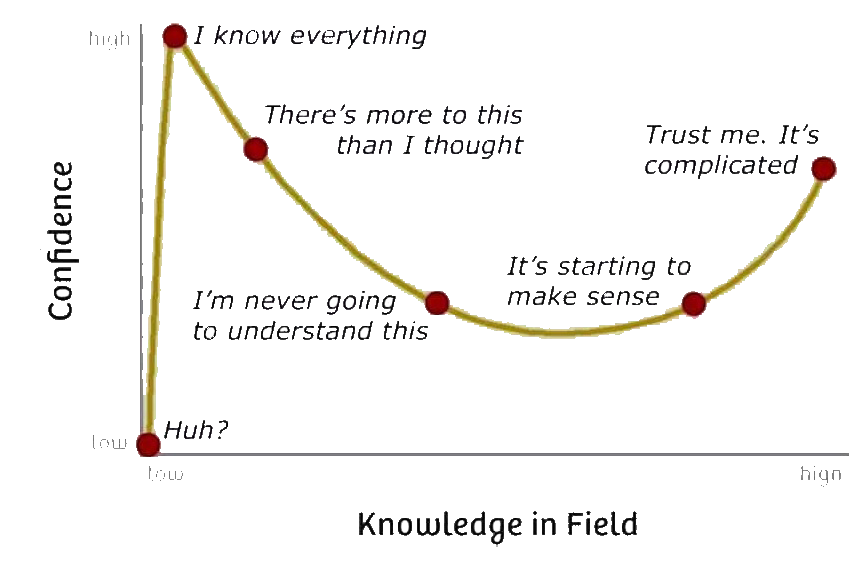
To investigate this phenomenon in the lab, Dunning and Kruger designed some clever experiments. In one study, they asked undergraduate students a series of questions about grammar, logic, and jokes, and then asked each student to estimate his or her score overall, as well as their relative rank compared to the other students. Interestingly, students who scored the lowest in these cognitive tasks always overestimated how well they did—by a lot. Students who scored in the bottom quartile estimated that they had performed better than two-thirds of the other students!
This “illusion of confidence” extends beyond the classroom and permeates everyday life. In a follow-up study, Dunning and Kruger left the lab and went to a gun range, where they quizzed gun hobbyists about gun safety. Similar to their previous findings, those who answered the fewest questions correctly wildly overestimated their knowledge about firearms. Outside of factual knowledge, though, the Dunning-Kruger effect can also be observed in people’s self-assessment of a myriad of other personal abilities. If you watch any talent show on television today, you will see the shock on the faces of contestants who don’t make it past auditions and are rejected by the judges. While it is almost comical to us, these people are genuinely unaware of how much they have been misled by their illusory superiority.
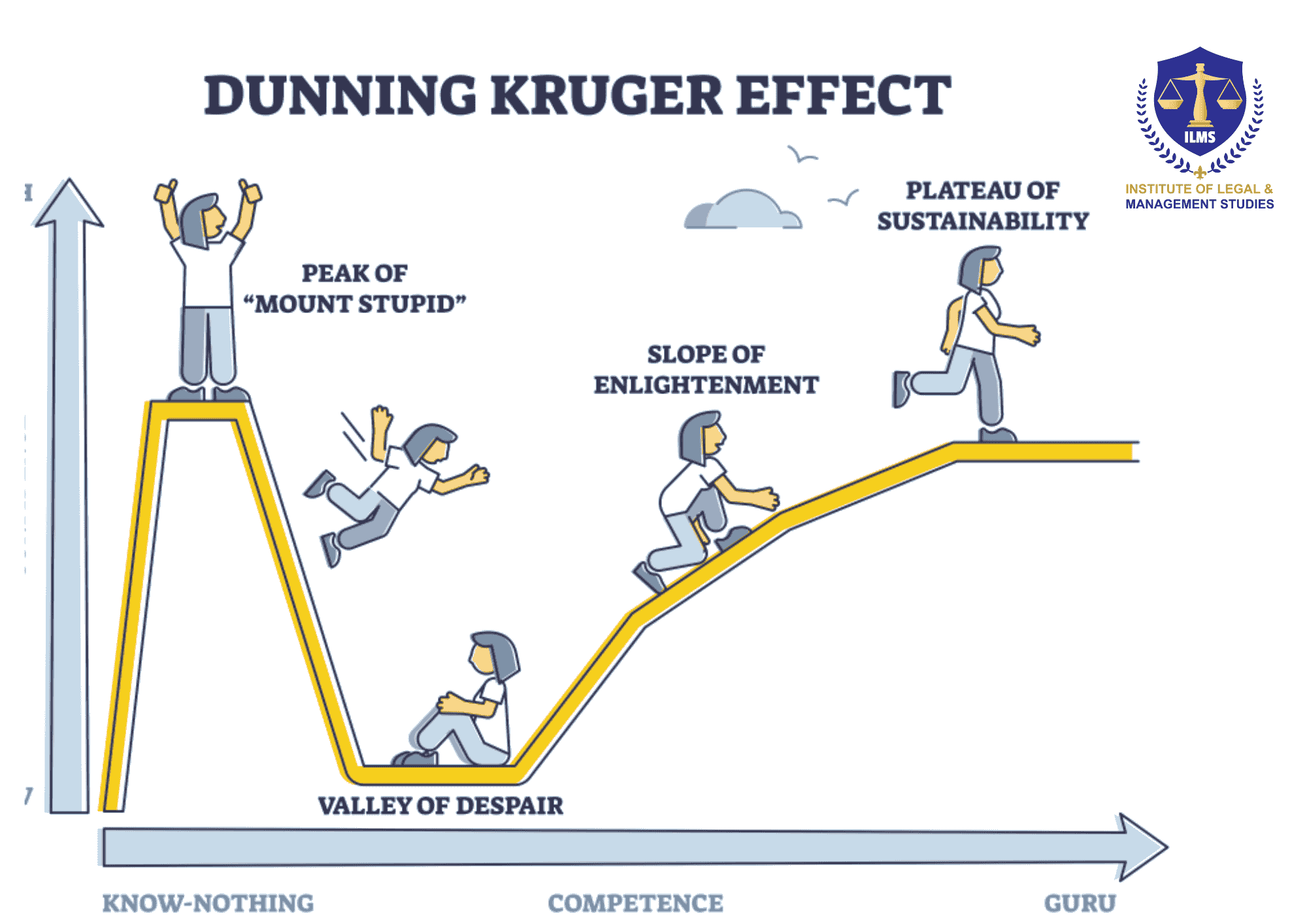
The Dunning Kruger Effect (DKE) is a cognitive bias where people with low ability/levels of knowledge tend to over-estimate the value of what they know, or their abilities.
1 In the chart, we see confidence starts out low when we know nothing about a subject. For me, this related to when I first started learning about golf.

Between 1-2 As we acquire knowledge about the subject, we very quickly start to over-estimate the value of that knowledge.

This is that person who reads a single book about a subject and suddenly knows “everything” about it.
For example, someone who reads “Hogan’s 5 fundamentals” and thinks this is everything you need to know to master the game.
Eventually we reach the peak of Mt stupid.
I think this is a little harsh, as it’s not technically a lack of intelligence, but you reach a point where you know enough to think you know it all.

This was me after I had learned so much about the mechanics of the swing – things like
I thought, if I could just master these things then my game would be fire.
Eventually, as you start to implement this knowledge, you quickly realize it’s not everything.

Even if you get better in the process, you start to realize there are significant knowledge-gaps.
This was me after hitting all the positions I wanted in my swing (on camera) and not playing as well as I thought I would.
Your confidence sinks and you eventually reach “the valley of despair”.

This was me after implementing all the knowledge I had about the swing in my own game and then, as a new teacher, into the swings of others and NOT seeing success.
Maybe everything I knew was wrong? What on earth can I be missing here? Should I even be teaching the game?
Then, as you acquire even more knowledge and experience, your confidence cautiously grows.
“Ok I’m starting to figure some things out, but I’m being more critical about it as I remember that time at the peak of Mt Stupid”

For me, the slope of enlightenment came after learning about impact physics.
Now I had definite answers as to why a ball did what it did, and could start to see the links between what I implemented in a player (and my own swing) and how it changed impact.
The plateau of sustainability – the expert arena.
This is where you have acquired an incredible wealth of knowledge and understanding.
But you still are cautious.
Wise men say, only fools rush in”

For me, this is where I have
So why the confidence gap? Why am I not as sure about everything as some people with less knowledge?
Well, I understand that we don’t know what we don’t know.

I also understand that there is so much more we are yet to learn about this game. Even in the past few years, we have started to learn much more about
There’s also the issue of, when implementing a new piece of information (such as a swing move), how the person responds to that can be unpredictable.
For example, I can see the error that a playing partner is doing on the course, but I often refuse to give advice about it on the course, as I know that this is not the environment to be learning a brand new swing move.

Dr. Abdulrahman Aljamouss, PhD is a strategic consultant, academic, trainer, and author with over 20 years of professional experience in workforce development, leadership capability building, and institutional transformation. He partners with organizations to design future-ready strategies, develop leadership pipelines, and deliver measurable, sustainable impact.




Dr. Abdulrahman Aljamouss, PhD is a strategic consultant, academic, trainer, and author with over 20 years of professional experience in workforce development, leadership capability building, and institutional transformation. He partners with organizations to design future-ready strategies, develop leadership pipelines, and deliver measurable, sustainable impact.

© Copyright - Dr. Abdulrahman Aljamouss, PhD
Powered & Designed with by Synapze

Dr. Abdulrahman Aljamouss, PhD is a strategic consultant, academic, trainer, and author with over 20 years of professional experience in workforce development, leadership capability building, and institutional transformation. He partners with organizations to design future-ready strategies, develop leadership pipelines, and deliver measurable, sustainable impact.