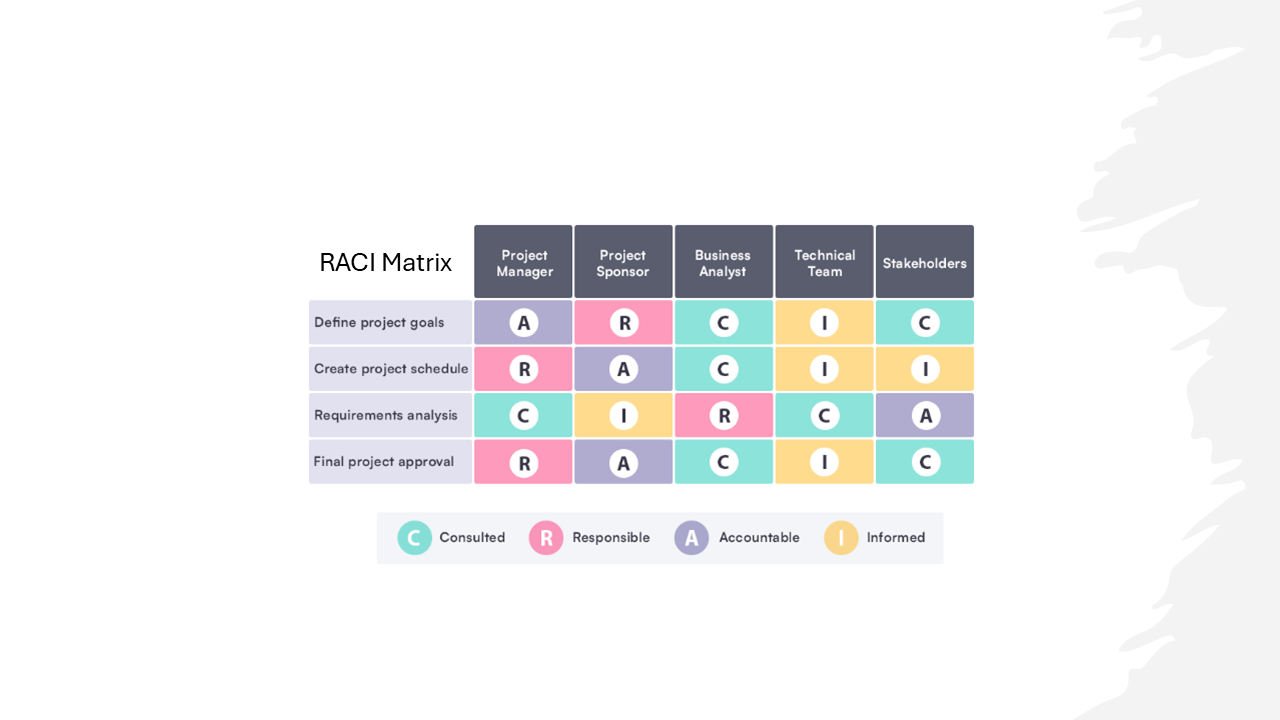
Simply put, the RACI matrix is a list of activities, along with information about each individual's role regarding these activities. For each activity, the name of the person responsible is assigned according to their role in the column designated for that role.
In every successful organization, clarity of roles and responsibilities is the foundation of performance, accountability, and smooth execution. One of the most effective tools used worldwide to achieve this clarity is the RACI Matrix — a structured responsibility assignment model that defines who does what in any project or operational process.
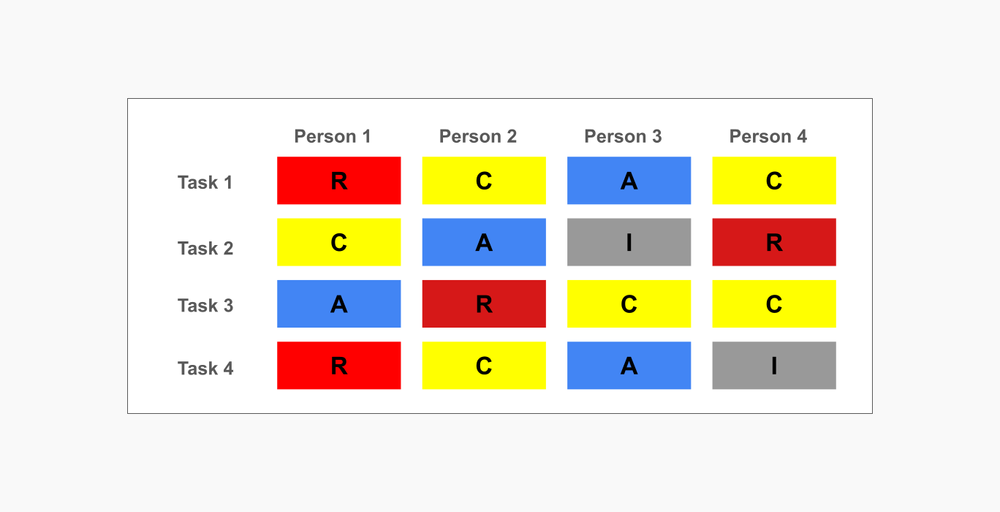
Simply put, the RACI matrix is a table that lists activities or tasks and assigns each individual’s role in relation to those tasks. For every activity, a specific letter is placed under each team member’s name to show their level of involvement. This structured approach eliminates confusion, improves communication, and ensures that no responsibility falls through the cracks.
What Is the RACI Matrix?
The RACI Matrix is a responsibility assignment framework used in project management, operations, and organizational design. It ensures that every task has clear ownership and that decision-making authority is properly defined.
The acronym RACI stands for:
Some organizations expand the model by adding roles such as Support, Assist, Recommend, Prepare, or Follow-up, depending on operational needs.
Alternative Responsibility Matrix Methodologies
While RACI is the most widely used model, other methodologies serve similar purposes. One example is the KISDA framework, which represents:
These variations are tailored to specific organizational environments, but the objective remains the same: clear authority, defined roles, and structured accountability.
The RAPID Framework
The RAPID® framework is a proprietary decision-making tool developed by Bain & Company, a prominent global strategy and management consulting firm. Its genesis lies in the need to help organizations make sound decisions quickly and efficiently, particularly when multiple stakeholders are involved. RAPID is designed to clarify decision accountabilities and thereby improve overall decision effectiveness. It is not merely a static chart but part of a disciplined approach that defines the "what, who, how, and when" of the decision-making process. The framework's core purpose is to ensure that roles and responsibilities are clearly understood upfront, setting the stage for efficient progress and reducing the likelihood of bottlenecks or unresolved disagreements.
Elaboration of Roles: Recommend, Agree, Perform, Input, Decide
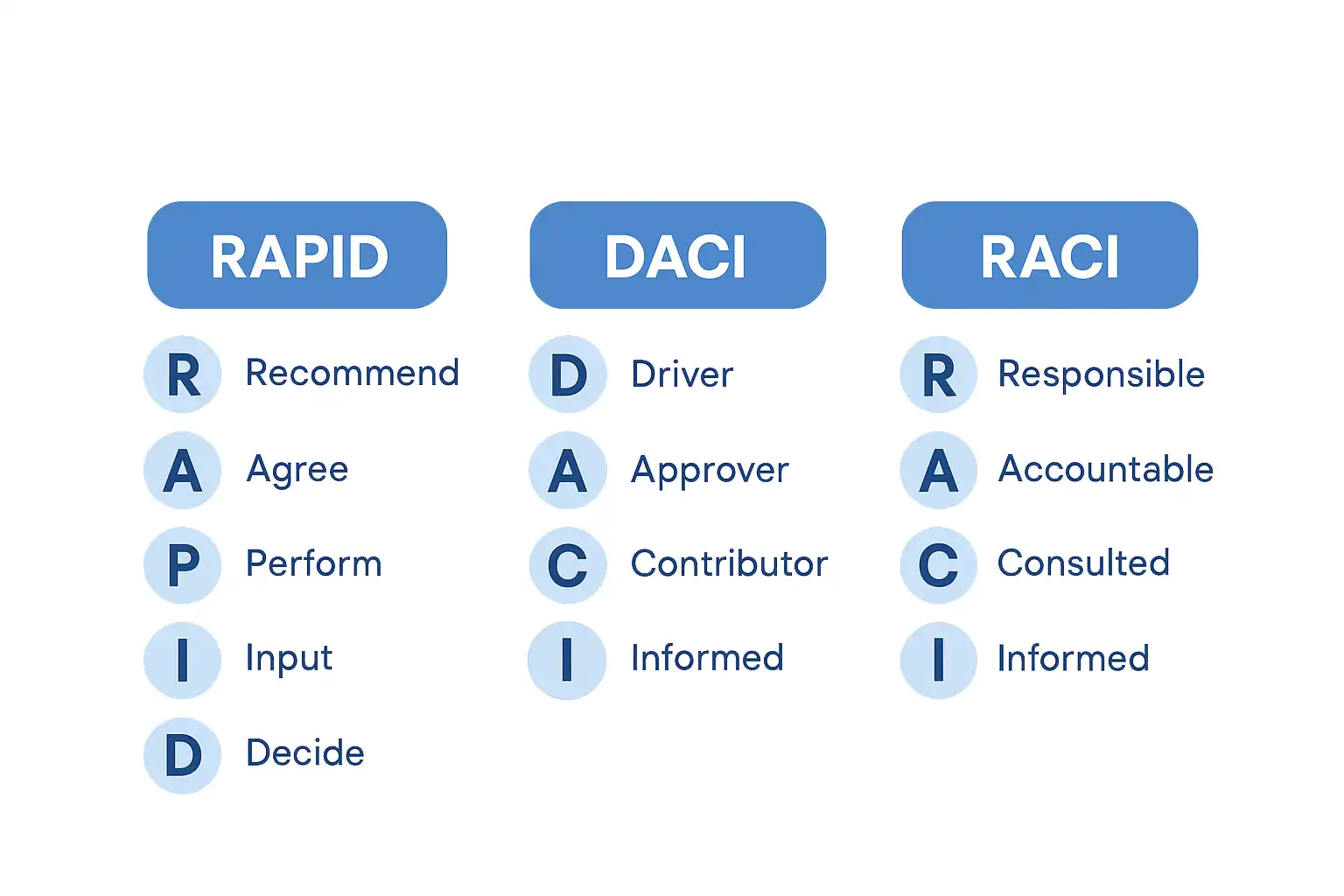
The RAPID acronym stands for Recommend, Agree, Perform, Input, and Decide. However, the natural flow of contributions within the process typically follows Recommend, Input, Agree, Decide, and then Perform.
The DACI Framework
The DACI framework is a decision-making model employed by organizations to bring clarity to roles and responsibilities specifically within the decision-making process. It is reported to have evolved from the RACI framework during the 1980s. Unlike RACI, DACI is specifically tailored for decision-making, aiming to streamline the process, enhance accountability, and ensure decisions align with organizational goals.
The DACI acronym represents four key roles involved in making and executing decisions:
Why the RACI Model Matters
The RACI model works effectively regardless of project size. Whether managing a small internal task or a large cross-functional transformation, defining roles ensures every team member understands their responsibilities.
This model reduces confusion about expectations, distributes workload more evenly, and accelerates decision-making. It also enhances transparency in project costs and accountability at the operational level.
Understanding Each RACI Role
How to Apply the RACI Matrix in the Workplace
Implementing a RACI matrix is straightforward:
Key Benefits of the RACI Matrix
Organizations that implement RACI effectively experience multiple advantages:
Structure of a Responsibility Assignment Matrix
The RACI matrix is built as a grid:
This visual format makes authority and involvement instantly understandable.
When Should You Use a RACI Matrix?
The RACI chart is useful in almost any project, but it becomes essential in complex, long-term initiatives involving multiple stakeholders and interdependent tasks.
For example, implementing an internal system may require design, programming, marketing, finance, and business development teams to work simultaneously. Each task may impact others, and major decisions may require senior management approval. In such environments, the RACI matrix prevents misalignment and ensures structured communication.
Typically, the project manager develops the RACI chart to avoid gaps in responsibility and to maintain clarity throughout the project lifecycle.
Organizational Requirements for Applying RACI
For the RACI methodology to function effectively, the organization should have:
Without these foundations, role assignment becomes difficult and inconsistent.
Basic Steps to Design a RACI Matrix
Final Thoughts
The RACI Matrix is more than a project management tool — it is a governance and performance framework that ensures clarity, accountability, and operational efficiency. By defining who is Responsible, Accountable, Consulted, and Informed, organizations can eliminate confusion, accelerate execution, and achieve better results with less friction. When roles are clear, performance improves — and the RACI matrix is one of the simplest and most powerful tools to make that happen.

Dr. Abdulrahman Aljamouss, PhD is a strategic consultant, academic, trainer, and author with over 20 years of professional experience in workforce development, leadership capability building, and institutional transformation. He partners with organizations to design future-ready strategies, develop leadership pipelines, and deliver measurable, sustainable impact.




Dr. Abdulrahman Aljamouss, PhD is a strategic consultant, academic, trainer, and author with over 20 years of professional experience in workforce development, leadership capability building, and institutional transformation. He partners with organizations to design future-ready strategies, develop leadership pipelines, and deliver measurable, sustainable impact.

© Copyright - Dr. Abdulrahman Aljamouss, PhD
Powered & Designed with by Synapze

Dr. Abdulrahman Aljamouss, PhD is a strategic consultant, academic, trainer, and author with over 20 years of professional experience in workforce development, leadership capability building, and institutional transformation. He partners with organizations to design future-ready strategies, develop leadership pipelines, and deliver measurable, sustainable impact.