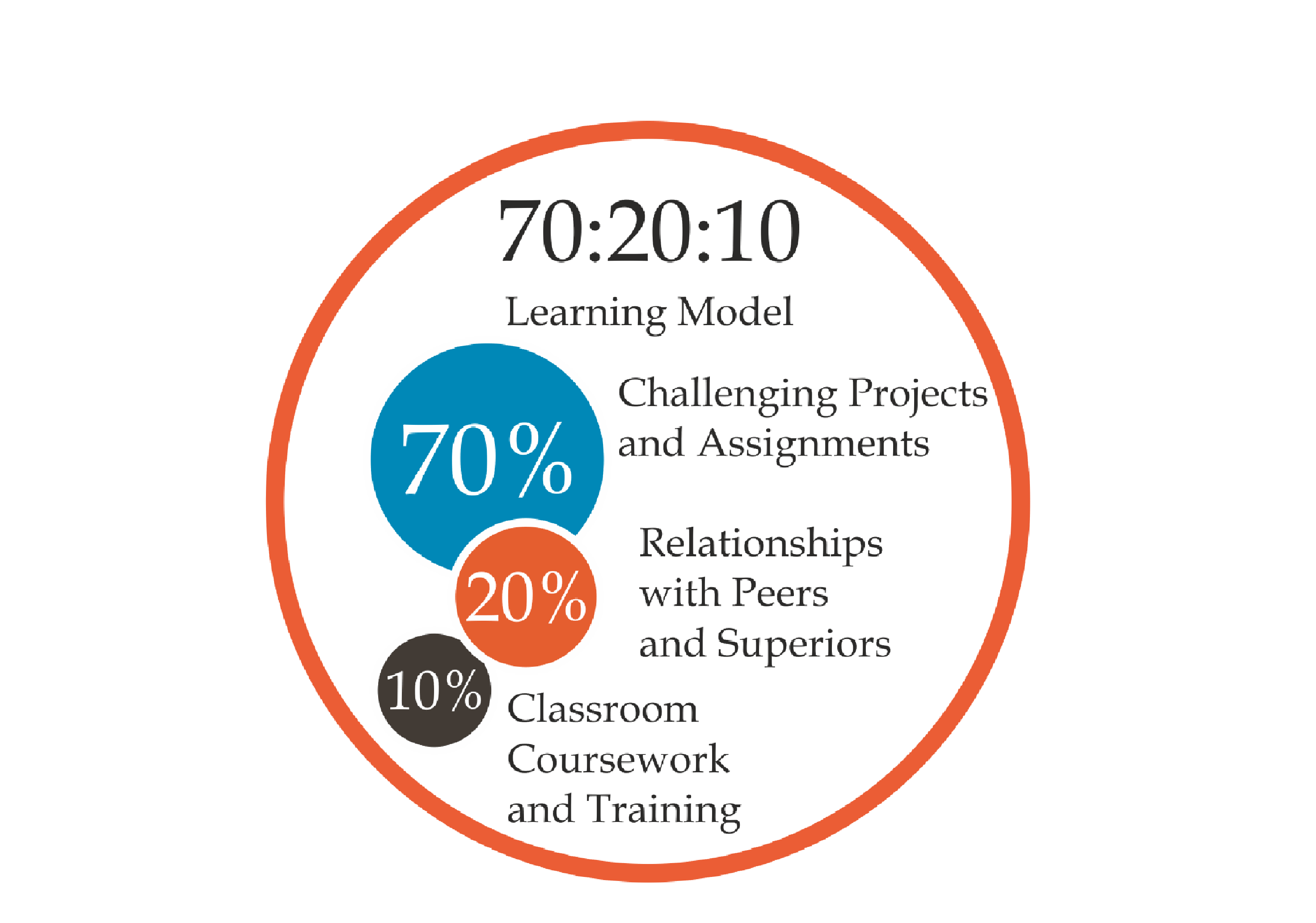
The 70:20:10 rule (sometimes stylised as 70/20/10 or 70-20-10) is an incredibly popular model for learning and development. It tells us about the way we build our knowledge and it isn’t afraid to get specific. In fact, it states that:
The 70:20:10 rule (sometimes stylised as 70/20/10 or 70-20-10) is an incredibly popular model for learning and development. It tells us about the way we build our knowledge and it isn’t afraid to get specific. In fact, it states that:
But why is the 70:20:10 model so important to L&D professionals? Well, a better understanding of how we learn empowers you to build a high performance learning culture.
These special numbers provide a guide you can follow to make sure you’re getting the balance of your training programme right.
They show just how important experiential and social learning are. If they aren’t a part of your training mix, then you’re clearly missing a trick!
Let’s take a closer look at how the 70:20:10 model works!
A Brief History of the 70:20:10 Model
The 70:20:10 model was born in the 1980s, back when back-combed hair ruled the catwalks. It was developed by McCall, Lombardo and Eichinger.
They asked nearly 200 executives to self-report on how they believe they learned. The results were shocking — at least at the time.
Respondents suggested that 70% of their learning came from challenging assignments (or experience on the job). A further 20?me from developmental relationships (or through social learning). Together, these two methods are often referred to as informal learning. That’s because they don’t follow a specified pattern and occur naturally on their own.
The last piece of the puzzle is formal learning. The model states that only 10% of our learning is down to formal training and a structured learning programme.
What does the 70% include?
A few examples of learning by doing include:
What does the 20% include?
Some other examples include:
What does the 10% include?
A few examples of courses and types of employee training and learning content include:
Dr. Abdulrahman Aljamouss, PhD is a strategic consultant, academic, trainer, and author with over 20 years of professional experience in workforce development, leadership capability building, and institutional transformation. He partners with organizations to design future-ready strategies, develop leadership pipelines, and deliver measurable, sustainable impact.

Dr. Abdulrahman Aljamouss, PhD is a strategic consultant, academic, trainer, and author with over 20 years of professional experience in workforce development, leadership capability building, and institutional transformation. He partners with organizations to design future-ready strategies, develop leadership pipelines, and deliver measurable, sustainable impact.

© Copyright - Dr. Abdulrahman Aljamouss, PhD
Powered & Designed with by Synapze

Dr. Abdulrahman Aljamouss, PhD is a strategic consultant, academic, trainer, and author with over 20 years of professional experience in workforce development, leadership capability building, and institutional transformation. He partners with organizations to design future-ready strategies, develop leadership pipelines, and deliver measurable, sustainable impact.