Klaus Schwab, Founder and Executive Chairman of the World Economic Forum in Geneva, addressed what he called the Fourth Industrial Revolution in an article titled "The Fourth Industrial Revolution: what it means, how to respond."
Klaus Schwab, Founder and Executive Chairman of the World Economic Forum in Geneva, addressed what he called the Fourth Industrial Revolution in an article titled "The Fourth Industrial Revolution: what it means, how to respond."
Schwab distinguished between three industrial revolutions that preceded the changes discussed in his article. The First Industrial Revolution relied on water and steam power to mechanize production. The Second Industrial Revolution utilized electric power for mass production on a wider scale and the establishment of assembly lines. The Third Industrial Revolution used electronics and information technology to automate work processes.
As for the Fourth Industrial Revolution, although it builds on the achievements of the Third Industrial Revolution, it is distinguished by being a digital revolution that fuses multiple technologies and blurs the lines between the physical, digital, and biological spheres.
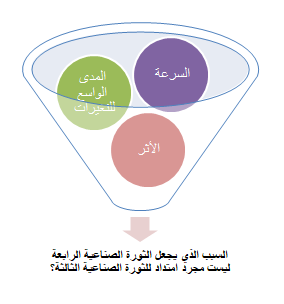
Why is the Fourth Industrial Revolution not merely an extension of the Third Industrial Revolution?
Schwab attributes the status of the Fourth Industrial Revolution as a revolution in itself to three reasons:
The Fourth Industrial Revolution cannot be confined to artificial intelligence alone. Attention must also be paid to new concepts like Deep Learning, which operates on a superior principle by processing vast amounts of data in real time to make effective decisions.
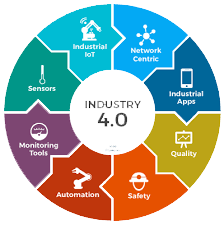
Future Changes Expected from the Fourth Industrial Revolution 4.0
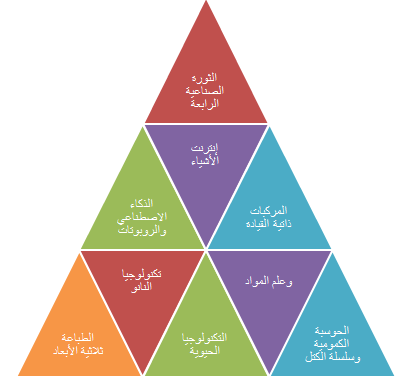
The Fourth Industrial Revolution builds on the significant achievements of the Third Revolution, particularly the internet, immense processing power, the ability to store information, and the seemingly unlimited potential for accessing knowledge. Today, these achievements open doors to limitless possibilities through major breakthroughs in emerging technologies such as artificial intelligence, robotics, the Internet of Things (IoT), autonomous vehicles, 3D printing, nanotechnology, biotechnology, materials science, quantum computing, blockchain, and others.
Dr. Abdulrahman Aljamouss, PhD is a strategic consultant, academic, trainer, and author with over 20 years of professional experience in workforce development, leadership capability building, and institutional transformation. He partners with organizations to design future-ready strategies, develop leadership pipelines, and deliver measurable, sustainable impact.



Dr. Abdulrahman Aljamouss, PhD is a strategic consultant, academic, trainer, and author with over 20 years of professional experience in workforce development, leadership capability building, and institutional transformation. He partners with organizations to design future-ready strategies, develop leadership pipelines, and deliver measurable, sustainable impact.

© Copyright - Dr. Abdulrahman Aljamouss, PhD
Powered & Designed with by Synapze

Dr. Abdulrahman Aljamouss, PhD is a strategic consultant, academic, trainer, and author with over 20 years of professional experience in workforce development, leadership capability building, and institutional transformation. He partners with organizations to design future-ready strategies, develop leadership pipelines, and deliver measurable, sustainable impact.