When studying processes and their connection to the learning and experience curve, it is useful to return to T.P. Wright, who introduced the concept of the learning curve in a study published in the journal "Aeronautical Sciences" in 1936. In it, he described how the direct labor cost for producing an aircraft fuselage decreases with experience. This concept is based on the idea that when the total quantity of units produced doubles, the unit production time decreases at a constant rate (Hunger, 2003, 64).
The Learning and Experience Curve
Dr. Abdulrahman Al-Jamous
When studying processes and their connection to the learning and experience curve, it is useful to return to T.P. Wright, who introduced the concept of the learning curve in a study published in the journal "Aeronautical Sciences" in 1936. In it, he described how the direct labor cost for producing an aircraft fuselage decreases with experience. This concept is based on the idea that when the total quantity of units produced doubles, the unit production time decreases at a constant rate (Hunger, 2003, 64).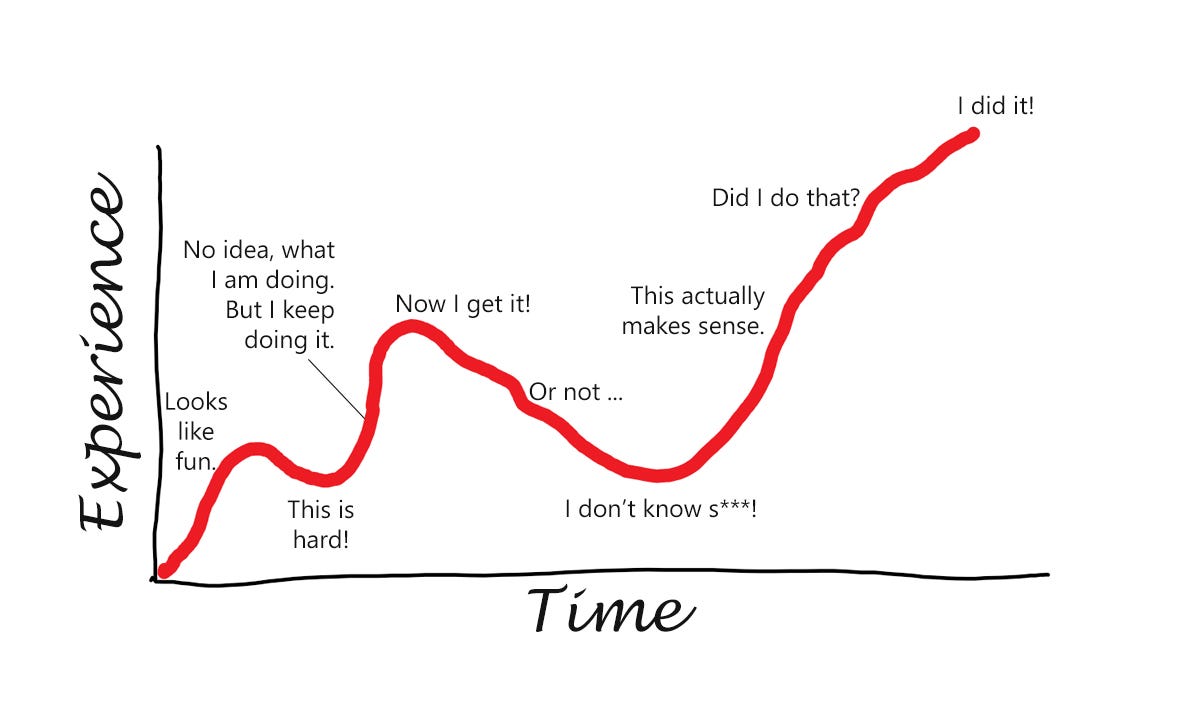
What is the Learning Curve?
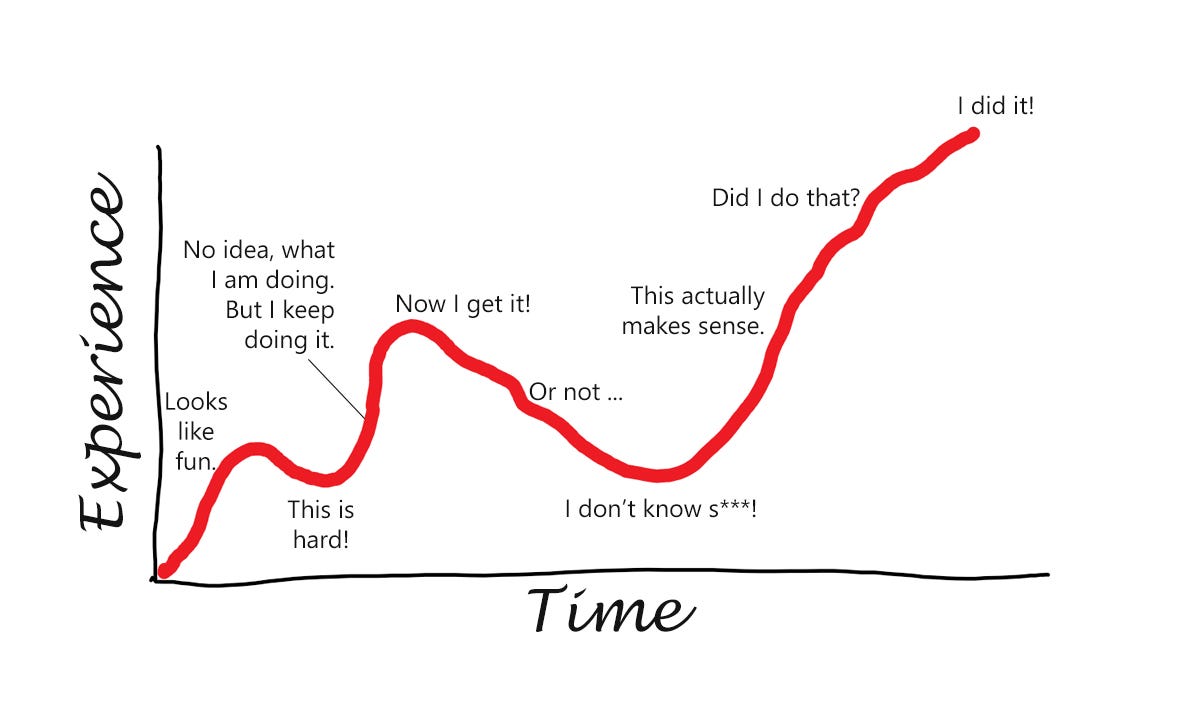
The learning curve is a graphical representation depicting the decrease in the average labor cost in repetitive operations as employees gain more learning. Learning is a continuous process, and the concept of the learning curve states that when an employee's work is repetitive in nature, he or she will take less time to produce subsequent units as production increases, thus achieving higher productivity. The learning curve was first explained by psychologist Hermann Ebbinghaus in 1885 and has since been used to measure production efficiency.
What is the Experience Curve?
The experience curve is a graphical representation showing the relationship between production cost and cumulative production. This is a broader concept compared to the learning curve, as it considers the effects of other production costs in addition to labor. The experience curve was developed in the 1960s by Bruce D. Henderson and the Boston Consulting Group (BCG). Research conducted by the researchers observed the effects of the experience curve in various industries, ranging from 10% to 25%.
The Boston Consulting Group (BCG) Law of Experience
Regarding the relationship between experience and learning, it is also useful to review the Law of Experience presented by the Boston Consulting Group (BCG). It states that the unit cost of a product decreases by a constant percentage each time experience doubles, meaning when cumulative production volume doubles. The contribution of the "Boston Group" lies in determining that the unit cost decreases by one-third. Doubling experience enables the organization to achieve a cost advantage, price leadership, and market leadership.
It is noteworthy that organizational learning attracted the attention of researchers who emphasized the importance of answering an important question: How do we respond to changing environmental conditions? They found that the only way to achieve a competitive advantage in this environment is for the organization to learn faster than competitors. Organizational learning was applied by Ford and illustrated through what is called the learning curve, which shows that with experience, costs decrease by about 20-30% (Hari Bapuji, 2005, 7-8).
</><><><>></><>><><>></><>><>><><>><>><>></>< >< src alt="The 70:20:10 Model: A Guide to Optimising Your Training Strategy">
Researchers believe that practical experience (70%) is the most beneficial for employees because it enables them to discover and refine job-related skills, make decisions, face challenges, and interact with influential individuals such as superiors and mentors within the work environment. It also helps them learn from their mistakes.
Meanwhile, the second 20% of learning is derived from a variety of activities, including social learning, mentoring, coaching, collaborative learning, and other methods of interaction among employees. Encouragement and feedback from peers are considered key advantages of this valuable educational approach.
The remaining 10% of professional development comes from traditional curricula and other educational activities. This type of learning is delivered in an organized manner and is used to improve employee performance through goal-oriented training led by coaches. It is considered complementary to experiential and social learning methods.
What is the 70-20-10 Development Model?
The 70-20-10 model is considered one of the famous and widely used models for developing leadership capabilities and other skills in the business field. This model is sometimes referred to as the "Lombardo and Eichinger Model."
In the process of developing leadership capabilities, this model is based on the idea that structured programs, such as training courses and workshops, should represent only 10% of the learning process. Meanwhile, you should invest 70% of your time in experimentation and learning through tasks, projects, and practical challenges, and 20% of your time in self-discovery and learning through interaction with others, such as mentors, colleagues, and managers.
Learning through Experience (70%): This is considered the largest portion of the learning process, where individuals learn through their practical experiences and daily tasks. This part of the model can be applied by:
Learning from Others (20%): Individuals learn through interaction with colleagues, managers, and mentors. This part of the model can be applied by following these tips:
Encouraging a culture of shared learning and exchanging ideas and experiences within the team.
Providing opportunities for mentoring and learning from experienced mentors.
Holding group learning sessions and regular discussions to exchange ideas and experiences.
Formal Learning (10%): This part includes training courses, workshops, and structured programs. To apply this part of the model, the following can be done:
Organizations use this model to shift their focus from training to performance so they can provide their workforce with a more holistic approach to learning. Maximizing the impact of learning through experience, socialization, and formal training methods enables companies to create and support a high-performing workforce.
It is important to note that the 70-20-10 ratios are not fixed. They should be viewed as a general guide for each type of learning. The specific breakdown may vary depending on the learning and development needs of your organization.
In conclusion, the 70-20-10 model is considered an effective and proven approach for developing leadership capabilities and other related skills. This model combines learning through practical experiences, interaction with others, and structured training to provide a balanced and comprehensive blend that helps individuals develop their skills and leadership capabilities in a sustainable manner. By applying this model in a supportive and stimulating work environment, organizations can enhance the capabilities of their current leaders and nurture future leadership talents. Additionally, sustainable education and personal development in leadership contribute to improving organizational performance and responding to continuous changes in the business world.
Dr. Abdulrahman Aljamouss, PhD is a strategic consultant, academic, trainer, and author with over 20 years of professional experience in workforce development, leadership capability building, and institutional transformation. He partners with organizations to design future-ready strategies, develop leadership pipelines, and deliver measurable, sustainable impact.


Dr. Abdulrahman Aljamouss, PhD is a strategic consultant, academic, trainer, and author with over 20 years of professional experience in workforce development, leadership capability building, and institutional transformation. He partners with organizations to design future-ready strategies, develop leadership pipelines, and deliver measurable, sustainable impact.

© Copyright - Dr. Abdulrahman Aljamouss, PhD
Powered & Designed with by Synapze

Dr. Abdulrahman Aljamouss, PhD is a strategic consultant, academic, trainer, and author with over 20 years of professional experience in workforce development, leadership capability building, and institutional transformation. He partners with organizations to design future-ready strategies, develop leadership pipelines, and deliver measurable, sustainable impact.