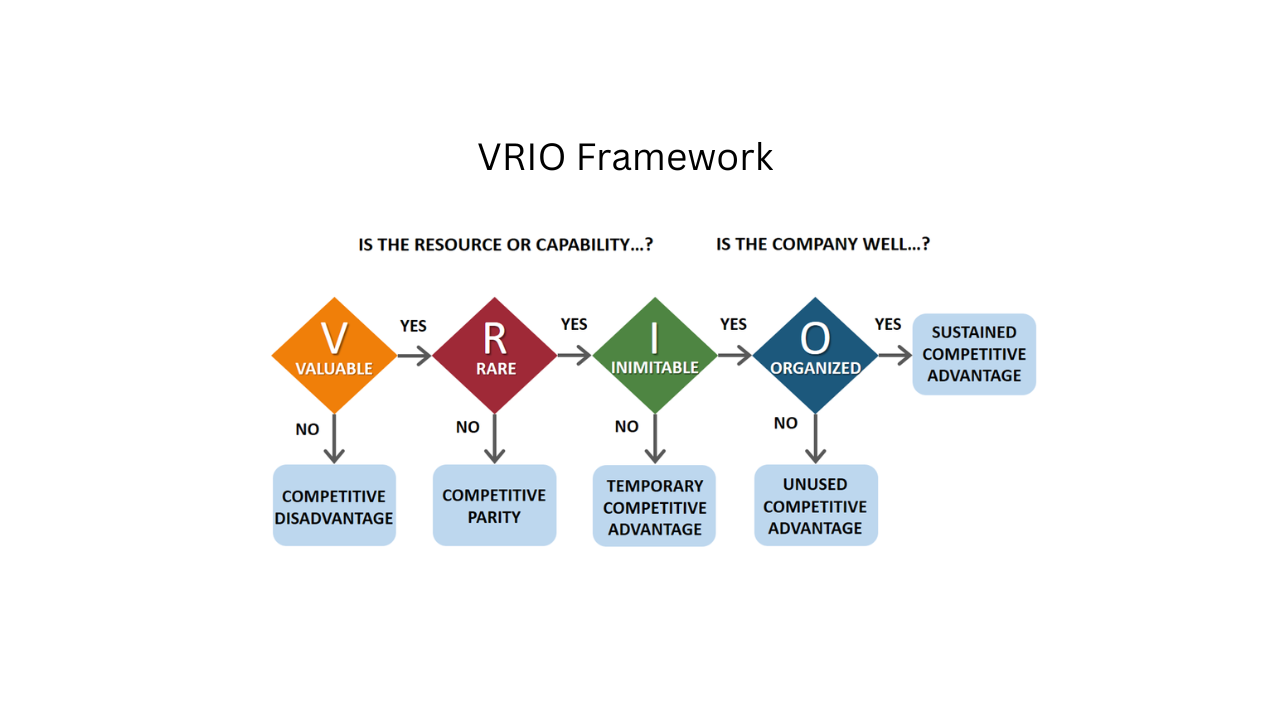
VRIO framework is the tool used to analyze firm’s internal resources and capabilities to find out if they can be a source of sustained competitive advantage. Term VRIO comes from the words value, rarity, imitability and organization.
VRIO Framework
VRIO framework is the tool used to analyze firm’s internal resources and capabilities to find out if they can be a source of sustained competitive advantage. Term VRIO comes from the words value, rarity, imitability and organization.
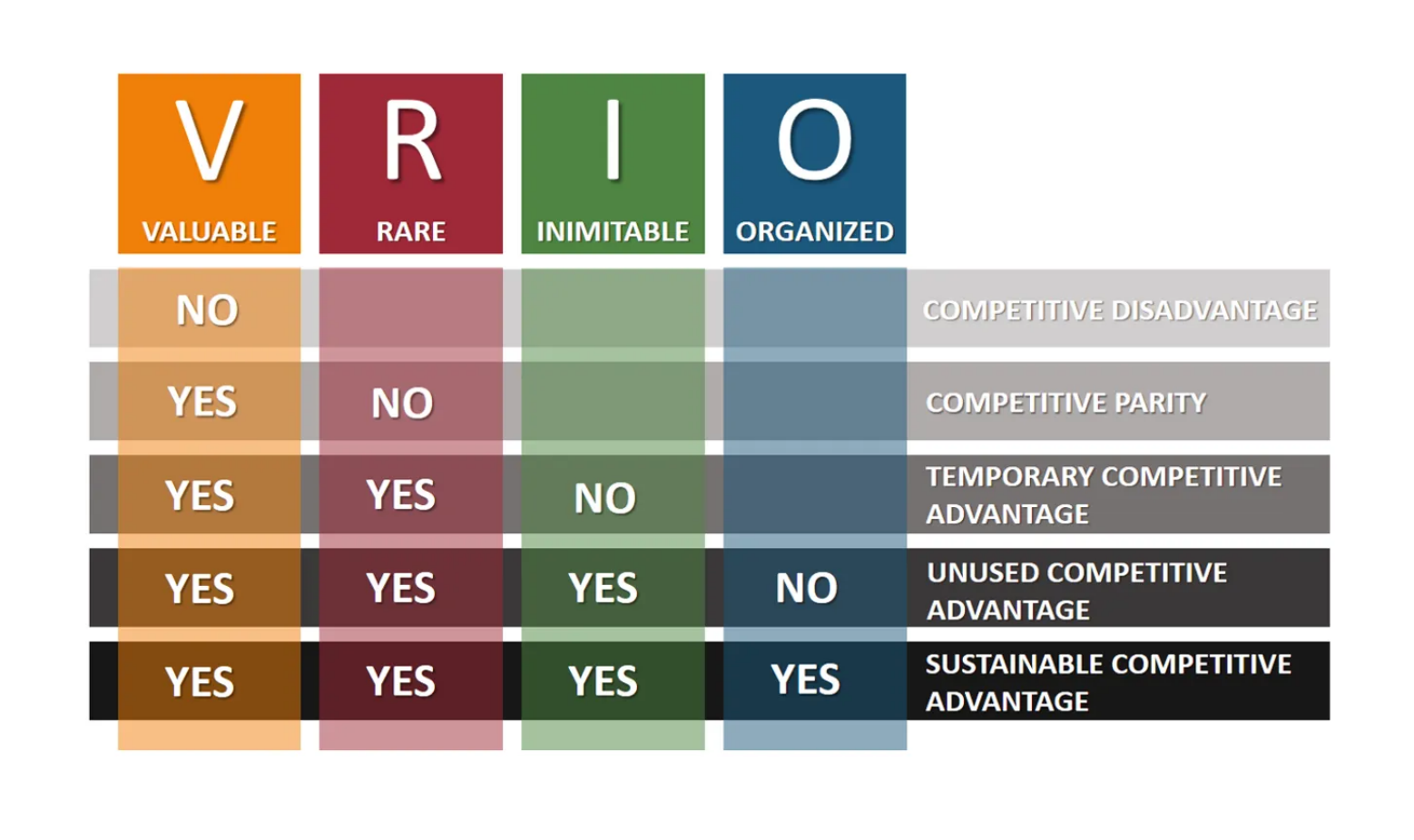 When using the VRIO framework, you will identify each of these variables for your business or the business model you’re analyzing. The main purpose of the VRIO framework is to identify these elements, and once you do so you can proceed to ask more specific questions to uncover more details about them.
Identification is important with this framework because if you can’t identify one of these variables it’s a sign that you should rethink some of the previous steps or go back and do more research on the overall idea you’re analyzing. That being said, let’s break down what each variable means in the VRIO framework.
The VRIO Model:

Valuable
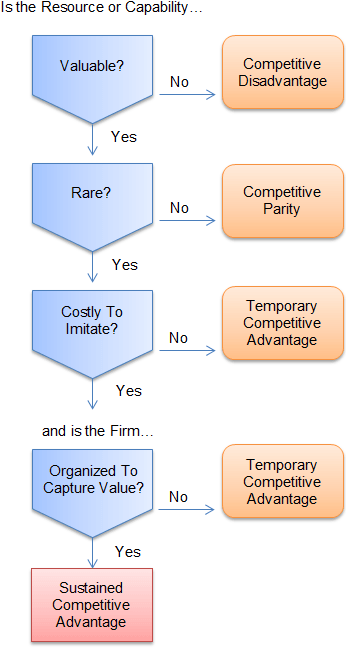
When a resource is valuable, it's providing the organization with some sort of benefit. However, a resource that is valuable and doesn't fit into any of the other dimensions of the framework, is not a competitive advantage. An organization can only achieve competitive parity with a resource that is valuable and neither rare nor hard to imitate.
Rare
A resource that is uncommon and not possessed by most organizations is rare. When a resource is both valuable and rare, you have a resource that gives you a competitive advantage.
The competitive advantage achieved from a resource that is both valuable and rare is usually short lived though. Competitors will quickly realize and can imitate the resource without too much trouble. Therefore it's only a temporary competitive advantage.
Hard to Imitate
Resources are hard to imitate if they are extremely expensive for another organization to acquire them. A resource may also be hard for an organization to imitate if it's protected by legal means, such as patents or trademarks.
Resources are considered a competitive advantage if they're valuable, rare, and hard to imitate. However, organizations that aren't organized to fully take advantage of the resource, may mean the resource is an unused competitive advantage.
Organized to Capture Value
An organization's resource is organized to capture value only if it is supported by the processes, structure, and culture of the company. A resource that is valuable, rare, hard to imitate, and organized to capture value is a long-term competitive advantage.

Dr. Abdulrahman Aljamouss, PhD is a strategic consultant, academic, trainer, and author with over 20 years of professional experience in workforce development, leadership capability building, and institutional transformation. He partners with organizations to design future-ready strategies, develop leadership pipelines, and deliver measurable, sustainable impact.




Dr. Abdulrahman Aljamouss, PhD is a strategic consultant, academic, trainer, and author with over 20 years of professional experience in workforce development, leadership capability building, and institutional transformation. He partners with organizations to design future-ready strategies, develop leadership pipelines, and deliver measurable, sustainable impact.

© Copyright - Dr. Abdulrahman Aljamouss, PhD
Powered & Designed with by Synapze

Dr. Abdulrahman Aljamouss, PhD is a strategic consultant, academic, trainer, and author with over 20 years of professional experience in workforce development, leadership capability building, and institutional transformation. He partners with organizations to design future-ready strategies, develop leadership pipelines, and deliver measurable, sustainable impact.